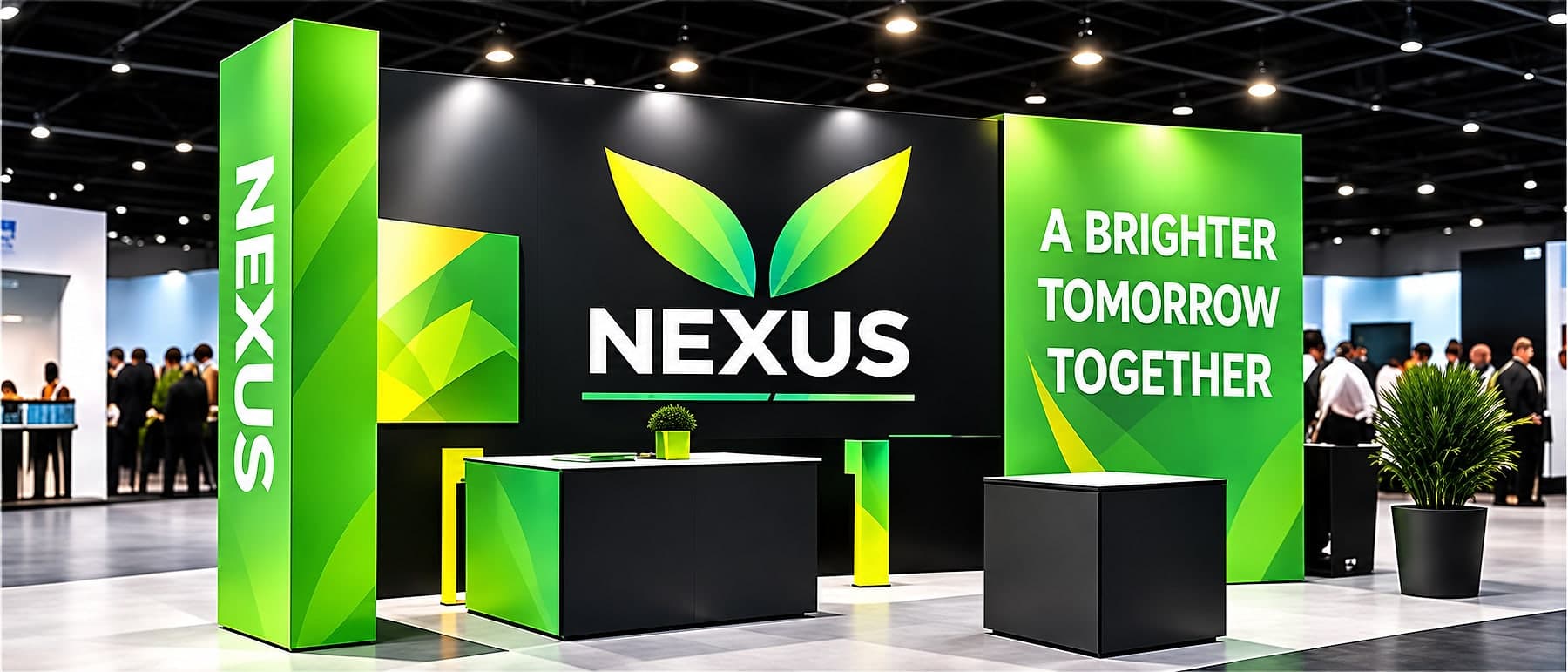
Environmental branding, the discipline of expressing a brand through physical space, has grown up. What used to mean a logo on a lobby wall is now a full field: experiential graphic design (EGD) that blends architecture, signage, wayfinding, and storytelling into spaces people move through and remember. As a commercial branding studio watching this shift across Southern California and nationwide projects, here are the trends defining 2026 and what they mean for anyone branding a physical space this year.
1. Sustainability moves from claim to spec
Clients increasingly ask what a graphic is made of and what happens to it at end of life. That's pushing the industry toward PVC-free and non-laminate films, water-based inks, and materials designed to be removed cleanly and recycled rather than landfilled. In 2026, 'is it sustainable?' is becoming a standard line item on the brief, not an afterthought, and manufacturers like 3M and Avery Dennison are expanding greener film lines in response.
2. Biophilic and textural design
Flat, purely digital-looking graphics are giving way to spaces that feel organic. Biophilic environmental branding (nature-inspired murals, wood and stone-look films, moss and living-wall accents paired with printed graphics, and softer organic color palettes) responds to a real desire for calmer, more human workplaces. The goal is an environment that lowers stress and feels grounded, not a screen you happen to be standing inside.
Experiential graphic design (EGD) is the professional term for branded environments: the intersection of graphic design, architecture, and wayfinding. It's the fastest-growing corner of the signage industry.
3. Bold maximalism alongside quiet minimalism
Two opposite aesthetics are thriving at once. On one side, maximalist environments: floor-to-ceiling murals, saturated color, oversized typography, and immersive patterned rooms built to be photographed and shared. On the other, refined minimalism: dimensional logos, monochrome palettes, and restraint that signals confidence. The through-line is intentionality; the middle-ground beige office is what everyone is leaving behind.
4. Retail and offices as content studios
Physical spaces are now designed to be shared online. Brands build 'moments' (a signature mural, a neon-style wall, an installation) specifically engineered to be a backdrop people photograph and post. This blurs the line between environmental branding and social marketing: the wall graphic is both a space and a piece of content that travels far beyond the people who walk past it.
- Signature photo-moment murals and installations
- Branded backdrops sized for phone-camera framing
- Neon-look and dimensional type built for social sharing
- Consistent hashtags and handles worked into the graphic
5. Wayfinding gets smarter and more branded
Wayfinding is no longer just arrows on a wall. In 2026 it's treated as a branded system: consistent iconography, typography, and color that guides people while reinforcing identity at every turn. Larger campuses are integrating digital and static signage, and even smaller offices are recognizing that clear, on-brand navigation is both a usability and a branding win. Good wayfinding makes a space feel considered.
6. Adaptable, swappable graphics
Brands want to refresh campaigns without renovating. That's driving demand for modular, repositionable systems: printed wall film and window graphics that swap seasonally, magnetic and track-mounted panels, and swappable printed panels that refresh with a new print. The environment becomes a platform you update, not a fixed cost you commit to for a decade.
7. Personalization and localization at scale
Multi-location brands increasingly want each site to feel connected to its neighborhood (a mural referencing the local city, regional imagery, community milestones) while staying inside one brand system. This 'globally consistent, locally relevant' approach makes a chain location feel like it belongs on its street instead of dropping in from corporate. It's a natural fit for studios that handle both the brand standards and the local install.
The common thread across all seven trends: spaces are being designed to be experienced, shared, and updated, not just decorated once and forgotten.
What it means for your 2026 project
- Brief the material story up front: sustainability and removability now matter to clients
- Plan at least one intentional photo-moment worth sharing
- Treat wayfinding as part of the brand system, not an afterthought
- Choose adaptable systems where you expect to refresh messaging
- Localize multi-site rollouts while holding one core brand standard
We help companies translate these trends into built environments as a certified 3M and Avery Dennison commercial branding studio, designing and installing murals, wayfinding, window and wall graphics, and experiential installations across the Inland Empire, Orange, LA, and San Diego counties, and nationwide. The brands that win in 2026 will treat their physical spaces as living, shareable, updatable expressions of who they are.