
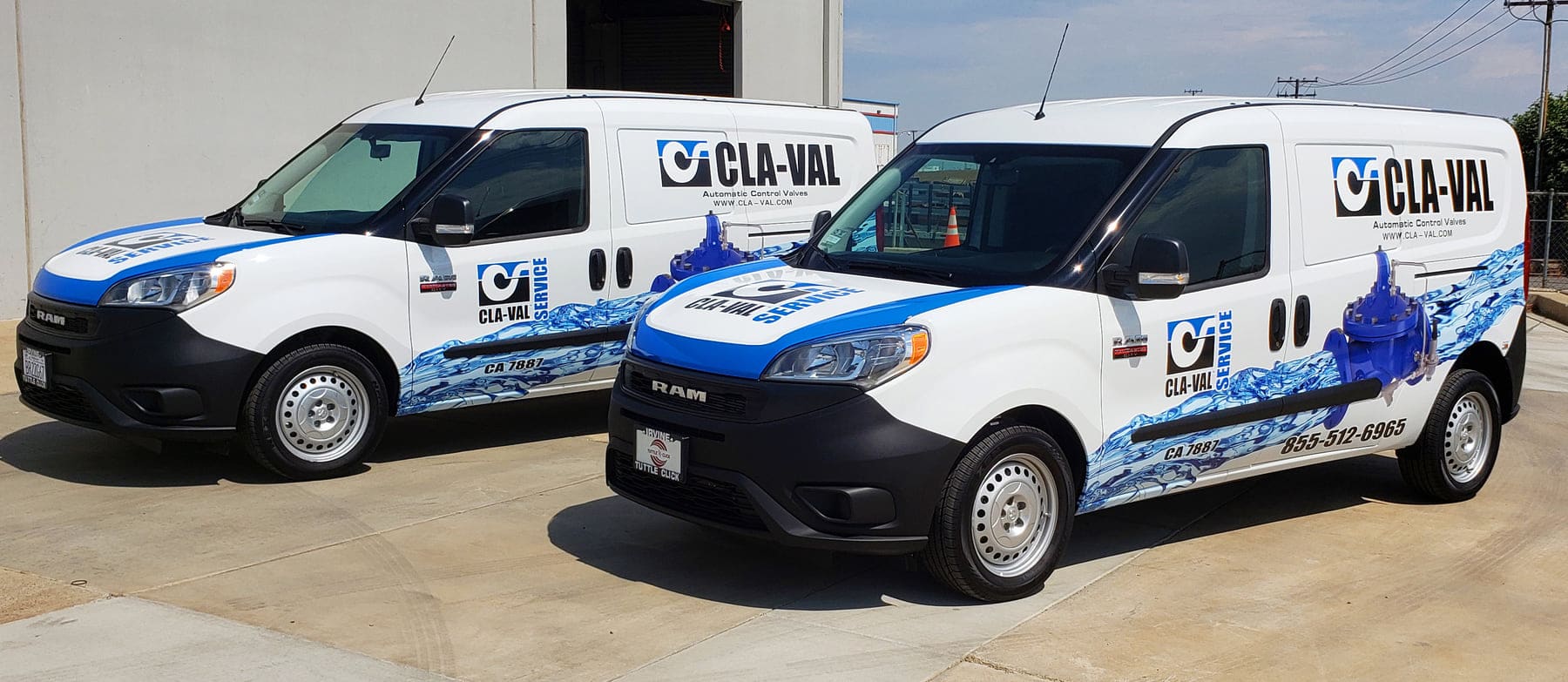
A food truck wrap has a harder job than almost any other vehicle graphic. It has to work as advertising at a distance, as a sign while parked, and as a backdrop in every photo a customer posts. Most trucks get one of those three right. Here is how we think about getting all three.
Five rules we follow on every food truck wrap
- What you sell goes on the truck, bigger than the brand name.
- Hours and your social handle are non-negotiable: people decide in about three seconds.
- Use one signature illustration, not five.
- Color contrast wins from across a parking lot.
- Use the back doors for your strongest branding and contact details. They face the line of waiting customers.
Why what you sell comes before who you are
Nobody is looking for your business name. They are hungry and deciding whether to walk over. A clever name in large type and the word tacos in small type is backwards, because the name means nothing until after the first visit. Lead with the food, make the name second, and let the name do its work on the customers you have already won.
Three seconds, from about forty feet
That is roughly the real decision window in a lunch rush or at an event. It is a useful test: print your layout, stand forty feet back, and see what you can read in three seconds. Whatever survives that test is your design. Everything else is detail for people already standing at the window.
Each surface has a different job
A food truck is not one canvas. It is four or five surfaces that people see in completely different situations, and treating them identically wastes most of them.
- Service window side: seen by the people already queuing and in nearly every photo. Strongest visual identity here, kept clear of the window and the hatch frame.
- Street side: seen in traffic and while parked. This is your billboard, so it carries the food and the name at maximum size.
- Rear doors: seen by the waiting line for several minutes at a time. The best place for your handle, your schedule, and anything you want people to remember.
- Front: often blocked, frequently overlooked, and worth a simple mark rather than detail.
- Lower panels: closest to grime and scuffing, so keep critical information above them.
The one thing not to put on a truck
Do not wrap your menu or your prices. It is the most common request and almost always the wrong call, for a simple reason: both change. Ingredient costs move, items get dropped, a seasonal special arrives, and now your truck is advertising something you no longer sell at a price you no longer charge. Film is not the right medium for information with a short shelf life.
Put the category of food on the wrap and keep the actual menu on a changeable board, where you can update it in a minute instead of planning around it. The wrap is for what you are. The board is for what you have today.
Anything with a date, a price, or a specific item on it belongs on a board, not in the film.
Contrast beats color choice
The most common design failure is low contrast: a mid-tone script on a mid-tone background that looks sophisticated at arm's length and vanishes at forty feet. Test your layout in greyscale. If the type disappears when the color does, it will disappear in bright sun too.
Heavy, simple letterforms outperform delicate ones at distance, and light type on a dark field usually holds up better outdoors than the reverse. Food photography works, but only one strong image rather than a collage, and only if it is genuinely good: a mediocre food photo at six feet wide does real harm.
Food trucks have surfaces other vehicles do not
This is where food truck wraps get genuinely technical, and why a design that looks right on a flat mockup can run into trouble on the actual truck. Expect to work around:
- Rivets and seams on the body panels, which film has to be worked into rather than bridged over
- Corrugated or ribbed side panels, where a detailed image will distort along the ribs
- Diamond plate at the lower edges and corners, which film does not adhere to reliably
- The service hatch and its frame, where the hatch has to keep opening and closing cleanly
- Propane and utility access doors, vents, and louvres that must stay operable and legible
- Exterior heat near the cooking side, which affects where film is placed and how it is finished
The practical consequence is that the usable design area on a food truck is smaller than the truck looks. Any important element placed where a vent, a hatch frame, or a run of rivets crosses it will be compromised. We map those obstacles onto the layout before the design is finalized, which is why we take detailed measurements and photographs of the specific truck rather than working from a generic template.
Design for the photograph
A food truck is photographed constantly, by customers and by event organizers, and those photos travel further than the truck does. Two things help: keep a clean area of solid color where a phone camera will frame people standing at the window, and make sure your name and handle are readable in a photo taken from a normal standing distance at an angle. Many wraps look excellent straight on and become unreadable in every real photo of them.
Think about evenings
Trucks work nights, and film does not glow. If you serve after dark, consider where your lighting falls and keep the critical information inside the lit area. Dark backgrounds that look striking at midday can swallow your name entirely at a night event, while the panel under your service light stays perfectly readable. Where the light goes should influence where the name goes.
Check local rules before you finalize
Requirements vary between cities and counties, and some jurisdictions have rules about what commercial vehicles must display, including permit numbers or identification in a particular size or position. Event organizers and commissaries sometimes have their own requirements. Worth confirming with your own jurisdiction before artwork is approved, since adding a required element afterwards means reprinting a panel.
A short checklist before you approve artwork
- Can you tell what food this is from forty feet away, in three seconds?
- Is the handle readable in a photo taken at an angle from normal standing distance?
- Does the layout still work in greyscale?
- Is anything important sitting on a vent, a hatch frame, rivets, or diamond plate?
- Is there any price, date, or specific menu item in the film?
- Will the critical information fall inside your lighting after dark?
Carmen's Tacos went from blank white to fully wrapped and saw a noticeable jump in walk-up business. A wrap that pulls hungry customers over from across the lot earns its keep quickly.